10 Best Price Scraping Tools for E-commerce in 2026 (Free & Paid)
Compared head-to-head and ranked: 10 leading price scraping platforms for 2026. Marketplace coverage, real pricing, and what's built-in vs what you have to engineer yourself.
Picking the right price scraping tool decides whether competitor monitoring takes 10 minutes a day or eats an engineer's afternoon every week. We compared 10 price scraping tools head-to-head for e-commerce in 2026 and ranked them on pricing transparency, marketplace coverage, and what's pre-built out of the box versus what you still have to engineer yourself. Here are the 10 best options, whether you're a single-store retailer or a 100K-SKU enterprise:
Skip the comparison — start with the e-commerce-native option
Most tools on this list are general-purpose proxy/scraper APIs you have to build on top of. ShoppingScraper is built specifically for e-commerce price data — Google Shopping, Amazon, bol.com, Coolblue, and 11 more marketplaces with pre-parsed product, price, and offer data out of the box. From €49/month, no infrastructure to build, no parser to maintain. Start a free trial →
- ShoppingScraper: E-commerce-native price data API with 14 pre-parsed marketplace scrapers, scheduling, geo-pricing, and dashboards (from €49/month).
- Oxylabs: General-purpose scraping infrastructure with AI-assisted parsing (entry plans from $49/month).
- Smartproxy: Proxy network with a scraping API layer for global data collection (from $30/month).
- Bright Data: Enterprise scraping infrastructure with city-level proxy targeting (usage-based, from $4/1,000 requests).
- ScraperAPI: Credit-based proxy/scraping API for developers (from $49/month).
- Crawlbase: Crawling API + Smart Proxy in one (from $99/month).
- Scrapingdog: Scraping API focused on Amazon and Google Shopping (from $40/month).
- Apify: Marketplace of community-built scrapers + custom-actor framework (free tier; paid from $49/month).
- ParseHub: Visual point-and-click desktop scraper (free tier available).
- WebHarvy: Visual desktop scraper with a one-time license ($139 lifetime).
Quick Comparison
| Tool | Starts around | Type | Marketplace coverage |
|---|---|---|---|
| ShoppingScraper | €49/mo | E-commerce data API | 14 marketplaces, pre-parsed |
| Oxylabs | $49/mo | Scraping infrastructure | Generic (you parse) |
| Smartproxy | $30/mo | Proxy + scraping API | Generic (you parse) |
| Bright Data | from $4/1K req. | Scraping infrastructure | Generic + some datasets |
| ScraperAPI | $49/mo | Scraping API | Generic (you parse) |
| Crawlbase | $99/mo | Crawling API + proxy | Generic + templates |
| Scrapingdog | $40/mo | Scraping API | Generic (you parse) |
| Apify | Free; from $49/mo | Actor marketplace | Varies per actor |
| ParseHub | Free; paid from ~$189/mo | Visual desktop scraper | Any site you click |
| WebHarvy | $139 one-time | Visual desktop scraper | Any site you click |
How we compared the 10 tools
Every price scraping tool on this list was scored on the same four criteria, in the same order:
- Marketplace coverage — which shops return structured price data out of the box, and which hand you raw HTML for any URL you click.
- Pricing transparency — published entry price, what a request actually costs at volume, and whether a free tier or trial exists.
- Time-to-first-chart — how long a retailer waits between signing up and seeing a competitor price move, with no engineer on the ticket.
- Maintenance load — who fixes the parser when a marketplace changes its layout: the vendor, or you.
Free and paid plans both count. Where a vendor publishes several tiers, we quote the cheapest plan that supports ongoing monitoring rather than a one-off extract.
The 10 tools, reviewed
1. ShoppingScraper
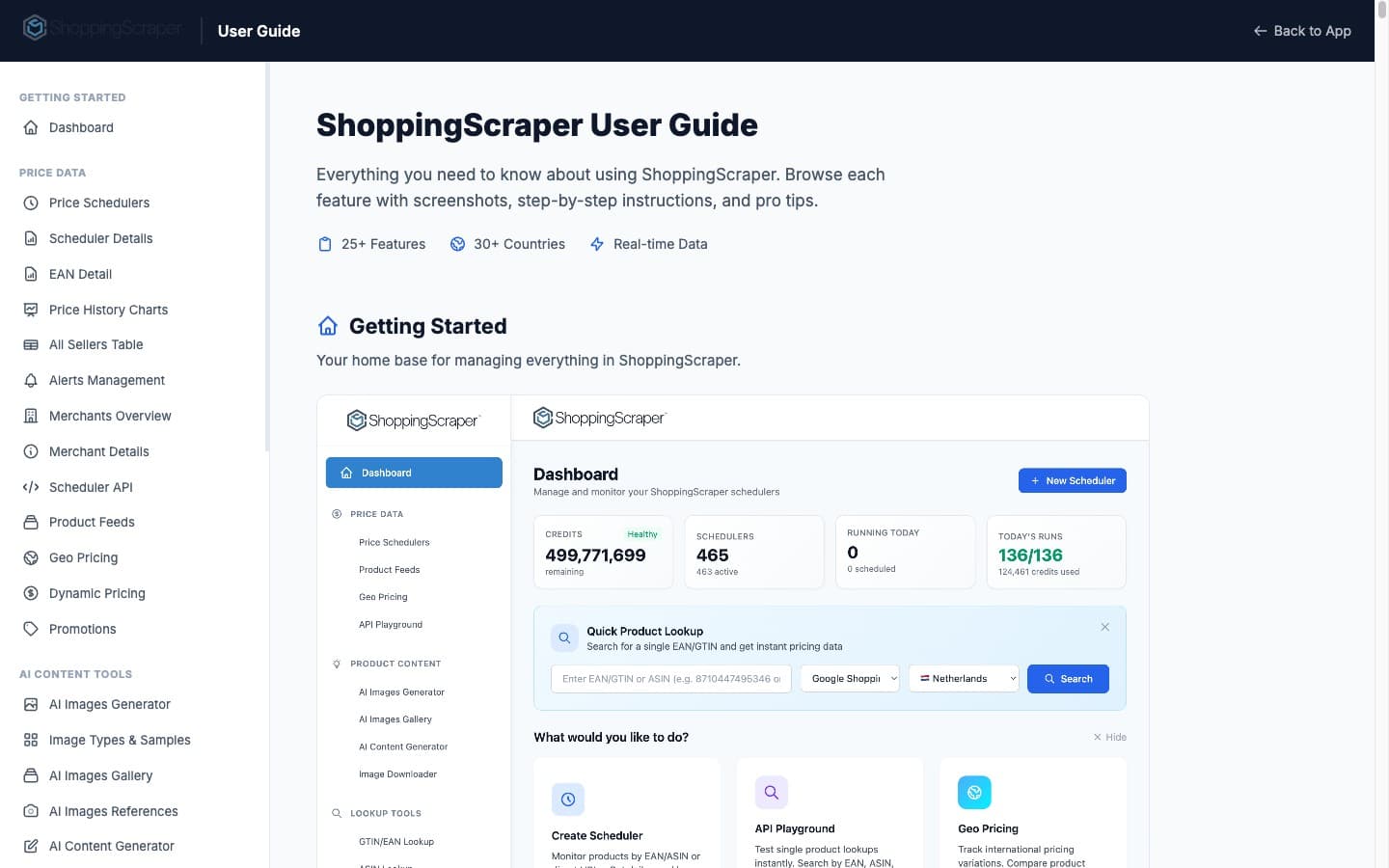
ShoppingScraper is an e-commerce-native price scraper API — built specifically for retailers and price-intelligence teams, not as general scraping infrastructure. It ships with 14 pre-parsed marketplace scrapers including a Google Shopping scraper, an Amazon price scraper, bol.com, Coolblue, Lidl, Albert Heijn, IKEA, Carrefour, Decathlon, and more. Every response returns structured JSON with title, price, stock, seller, variants, reviews, and offer metadata — no HTML parsing required.
| Feature | Details |
|---|---|
| Marketplace coverage | 14 dedicated scrapers — Google Shopping, Amazon, bol.com, Coolblue, Lidl, AH, IKEA, Carrefour, Decathlon, Hornbach, Galaxus, BestBuy, Wayfair, H&M |
| Data shape | Pre-parsed JSON: title, price, stock, seller, variants, reviews, GTIN/EAN |
| Built-in dashboard | Schedulers, price alerts, geo-pricing across 50+ countries, merchant intelligence, AI content + image generation |
| Integration | REST API, Google Sheets, MCP for Claude Desktop / OpenAI |
| Pricing | From €49/month (5,000 requests) up to enterprise €999+/month (500,000+ requests); custom enterprise above that |
Unlike infrastructure-style competitors on this list, ShoppingScraper hands you the full stack: managed proxies, marketplace parsers, dashboards, schedulers, and alerts all included. The same platform serves a single retailer benchmarking 50 SKUs and an enterprise tracking 100,000+ products across 50 countries — pricing scales linearly without re-architecture.
What's included out of the box
- 14 marketplace scrapers returning structured JSON
- Scheduled price monitoring + email/webhook alerts
- Geo-pricing comparison across 50+ countries
- Price Position Matrix (Price Leader → Overpriced classification)
- Merchant Intelligence with TrustPilot integration
- AI product content generation (15 languages, 3 tones)
- AI product image generation (10 styles)
- MCP integration for AI workflows
- Multi-user access, role-based permissions, and audit logs on enterprise plans
2. Oxylabs
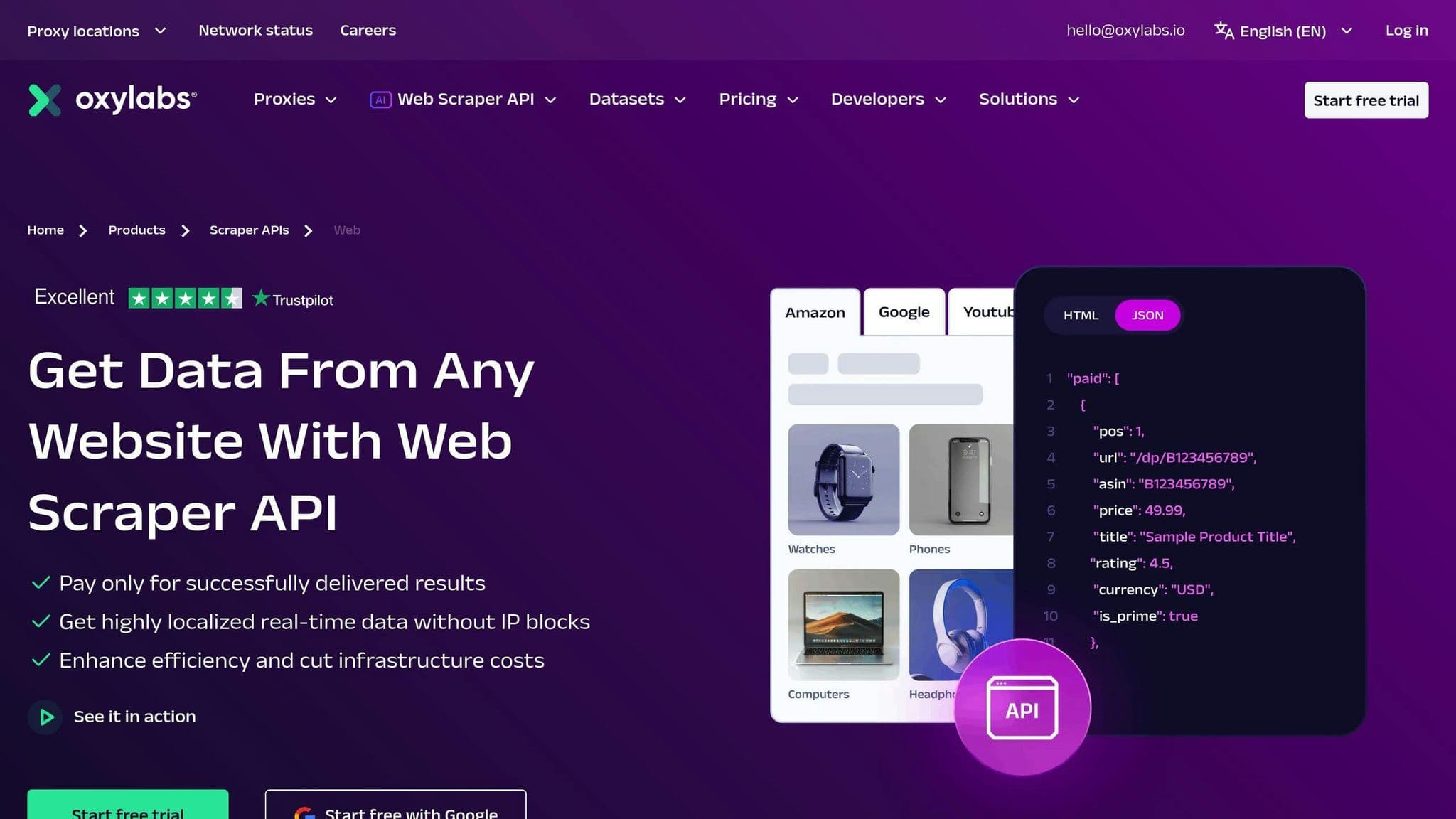
Oxylabs is a high-end price scraping tool tailored for e-commerce businesses. It offers a solid infrastructure capable of extracting real-time data from over 100 online marketplaces, including big names like Amazon, eBay, and Google Shopping.
One of its standout features is an AI-powered assistant paired with an automated parser, ensuring structured data output for all product pages.
| Feature | Details |
|---|---|
| Data Sources | Access to 100+ online marketplaces |
| Integration | Real-time API and batch processing |
| Parser Support | Automated for structured results |
| Trial Period | 7 days with up to 5,000 results |
Its pricing starts at $49 for 24,500 requests (equivalent to $2 per 1,000 requests). This scalable model makes it a strong choice for businesses focused on dynamic pricing strategies to stay ahead of competitors.
Key Benefits
Oxylabs offers flexible data collection options, including real-time API integration and batch processing, making it adaptable to various monitoring needs.
What truly sets it apart is its excellent support system. This includes detailed API documentation and around-the-clock customer service via live chat. Additionally, its built-in security features ensure compliance with data protection laws, giving users peace of mind.
The tool's structured data outputs make analysis and pricing decisions faster and more efficient. With a high extraction success rate and the ability to handle complex e-commerce platforms, Oxylabs is a strong option for businesses in competitive markets.
While Oxylabs delivers on scalability, you'll still build your own marketplace parsers on top of it. ShoppingScraper offers dedicated scrapers for the same big marketplaces — including Amazon and Google Shopping — pre-parsed and ready to query. See the side-by-side →
Up next: Smartproxy, which provides a more cost-effective solution for smaller-scale operations.
3. Smartproxy
Smartproxy operates across 195 locations worldwide, making it a solid choice for businesses looking to gather market data on a global scale.
| Feature | Details |
|---|---|
| Starting Price | $30 for 15,000 requests |
| Cost per Request | $2.00 per 1,000 requests |
| Geographic Coverage | 195 locations with country-level targeting |
| Trial Period | 7 days |
| Integration Options | Proxy server and API |
Smartproxy supports both proxy server and API integration, offering flexibility in how businesses collect and use data. This dual option makes it suitable for various data-gathering needs.
Key Features
Smartproxy is particularly useful for scraping data from Amazon's marketplace. It includes parsing tools designed to extract pricing information accurately. For companies monitoring multiple e-commerce platforms, Smartproxy simplifies the process by supporting standardized parameters. Just provide the full URL of the target site, and the tool handles the rest.
Data Accuracy and Performance
Smartproxy uses a pay-per-success model, meaning you only pay for successful data retrieval. This is a cost-effective option for businesses that need accurate data without overspending.
The tool delivers results in a structured format, making it easy to integrate into pricing tools. While it doesn't include advanced AI-driven features like some competitors (e.g., Oxylabs), its affordability and straightforward design make it a great choice for smaller companies starting with automated price tracking. It also supports real-time updates and batch processing, balancing cost and functionality effectively.
Next, we'll dive into Bright Data, a solution designed for larger-scale operations and advanced needs.
4. Bright Data
Bright Data is a price scraping tool designed for businesses that need advanced features and handle large-scale operations. Its Web Scraper API and IDE offer powerful options for gathering pricing data from various marketplaces.
| Feature | Details |
|---|---|
| Pricing | Starts at $4 per 1,000 requests, varies by domain type |
| Dataset Cost | $0.001 per record |
| Geographic Coverage | Global, with detailed targeting options |
| Trial Period | 7 days for business clients |
Key Features
Bright Data stands out by enabling real-time data collection through its Web Scraper API. It includes custom endpoints tailored for major e-commerce platforms like Amazon, giving businesses the ability to track competitor pricing and adjust their strategies as markets shift.
Data Collection and Processing
The platform supports both batch processing for large-scale monitoring and real-time streaming for immediate insights. Once scraped, data is automatically organized, making pricing analysis faster and helping companies make informed decisions across markets.
Performance and Scalability
Bright Data provides global coverage and city-level targeting, making it a great choice for businesses managing regional pricing differences. Its infrastructure is built to handle large-scale operations, which is especially useful for enterprises tracking prices across multiple regions and marketplaces at once.
The Web Scraper IDE allows technical teams to fine-tune scraping parameters for more precise data collection. While it may take some time to get used to compared to simpler tools, this added control can be a game-changer for businesses with complex pricing strategies.
Bright Data vs ShoppingScraper for e-commerce
Bright Data is general-purpose scraping infrastructure — you build the marketplace parsers, dashboards, and price-monitoring logic yourself. ShoppingScraper ships with 14 pre-parsed marketplace scrapers, scheduled jobs, and price alerts out of the box. See the side-by-side comparison →
For those looking for a different solution, ScraperAPI offers some interesting features worth considering.
5. ScraperAPI
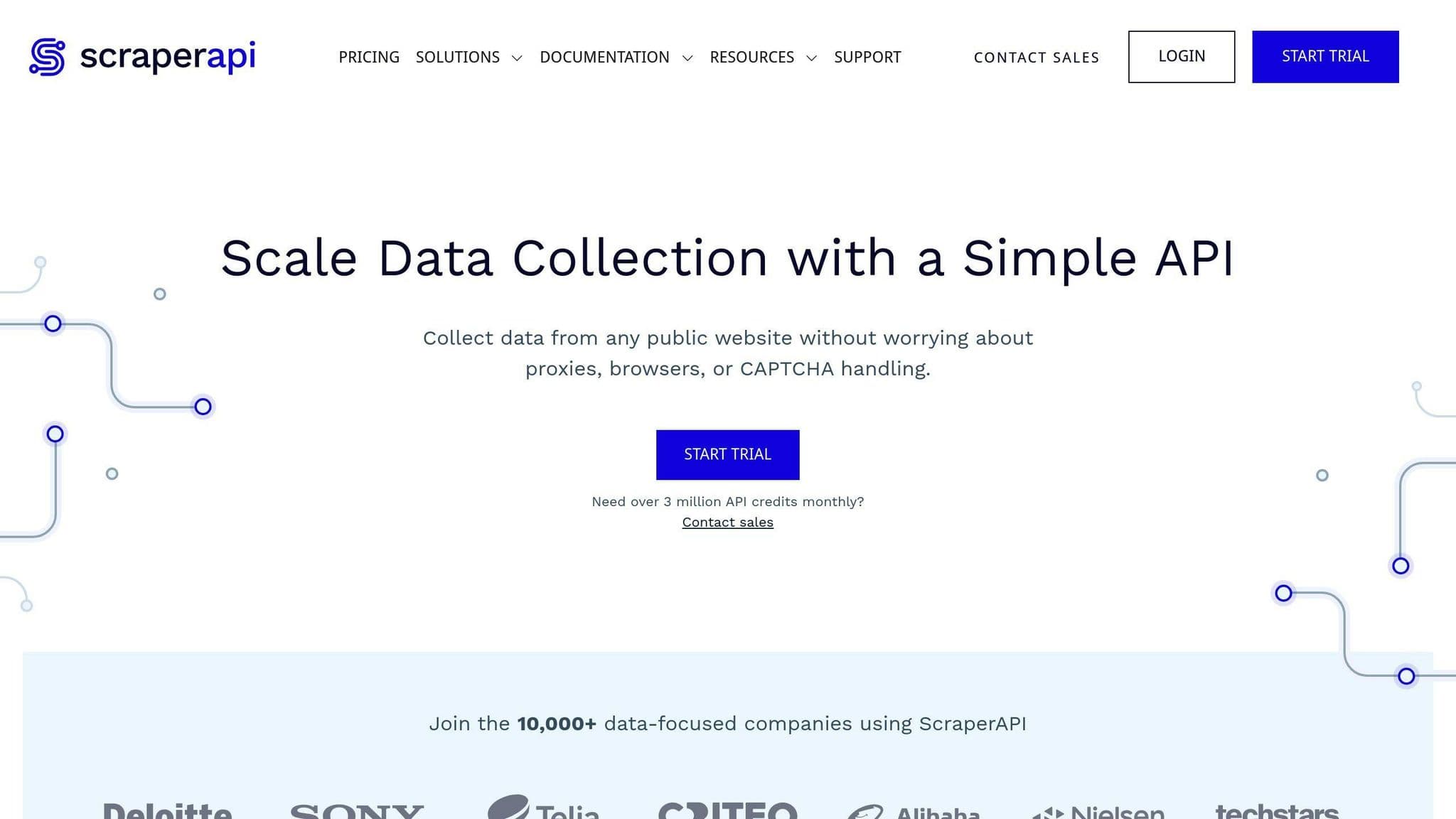
ScraperAPI is a powerful tool for e-commerce businesses looking to track prices efficiently. It provides structured data endpoints tailored for major platforms like Amazon, Google Shopping, and Walmart.
| Feature | Details |
|---|---|
| Starting Price | $49 for 100,000 API credits |
| Free Plan | 1,000 API credits/month |
| Trial Period | 7 days with 5,000 requests |
| Geographic Coverage | Global coverage with location customization |
Integration and Processing
This platform offers flexible integration options, including proxy servers, APIs, and SDKs. It also features asynchronous API capabilities and built-in parsing for structured data, reducing the technical workload involved in monitoring prices.
Performance Highlights
ScraperAPI ensures businesses can gather real-time pricing data while handling anti-scraping defenses effectively. This makes it reliable for collecting data even from websites with strict protections.
Scalability
Its credit-based system is designed to grow with your needs, whether you're a small business or a large enterprise. The global reach and customizable location options make it ideal for businesses operating in multiple regions.
With its structured data support and dependable performance, ScraperAPI is a viable choice for teams comfortable building marketplace logic on top of a generic scraping endpoint. For Amazon and Walmart specifically, ShoppingScraper gives you the parsing layer for free — see the Amazon price scraper or side-by-side ScraperAPI comparison.
However, for those looking for additional scraping features, Crawlbase might be worth considering.
6. Crawlbase
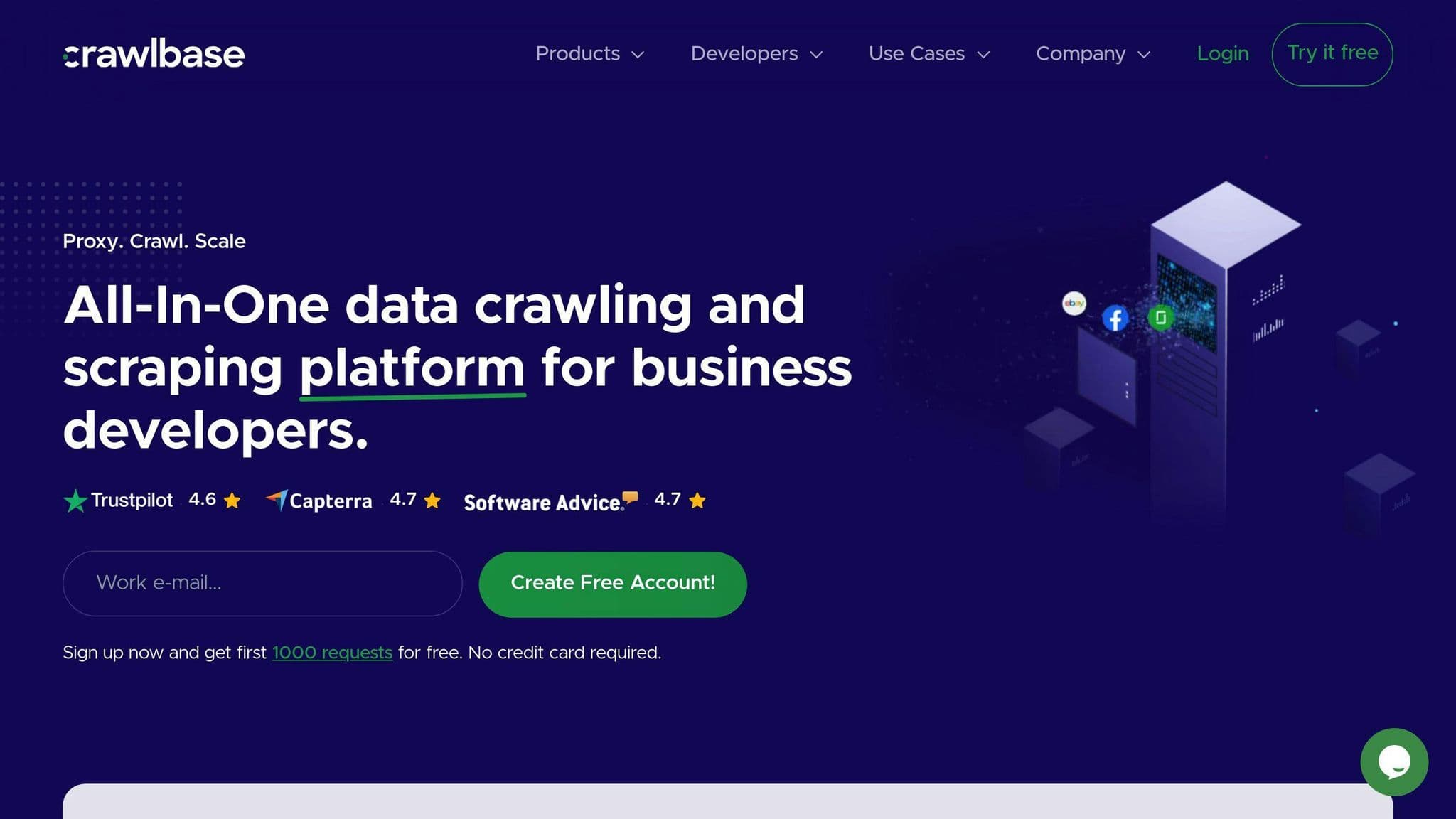
Crawlbase combines a Crawling API with a Smart Proxy to create a two-in-one solution for price scraping. This setup allows e-commerce businesses to gather pricing data from platforms like Amazon, eBay, Walmart, and AliExpress with ease and accuracy.
| Feature | Details |
|---|---|
| Solution Types | Crawling API and Smart Proxy |
| Pricing | Plans start at $99/month, with pay-per-request options for extra features |
| Key Capabilities | Built-in parsers, real-time monitoring, and customizable data extraction |
| Trial Option | Includes 1,000 free requests |
Key Features
Crawlbase simplifies complex data extraction by offering structured data endpoints and built-in parsers for major e-commerce platforms. This eliminates the need for advanced coding. Its dual-tool setup caters to both technical and non-technical users. The Crawling API delivers automated parsing with structured outputs, while the Smart Proxy allows businesses with their own scraping tools to customize data extraction.
Use Cases
Crawlbase is ideal for accurate, real-time price tracking and reliable data collection from dynamic websites. Its pricing model, which charges only for successful requests, is particularly appealing to small and medium-sized e-commerce businesses looking to refine their pricing strategies.
While Crawlbase is strong in flexibility and affordability, Scrapingdog offers extra automation features that may better suit smaller-scale operations.
7. Scrapingdog
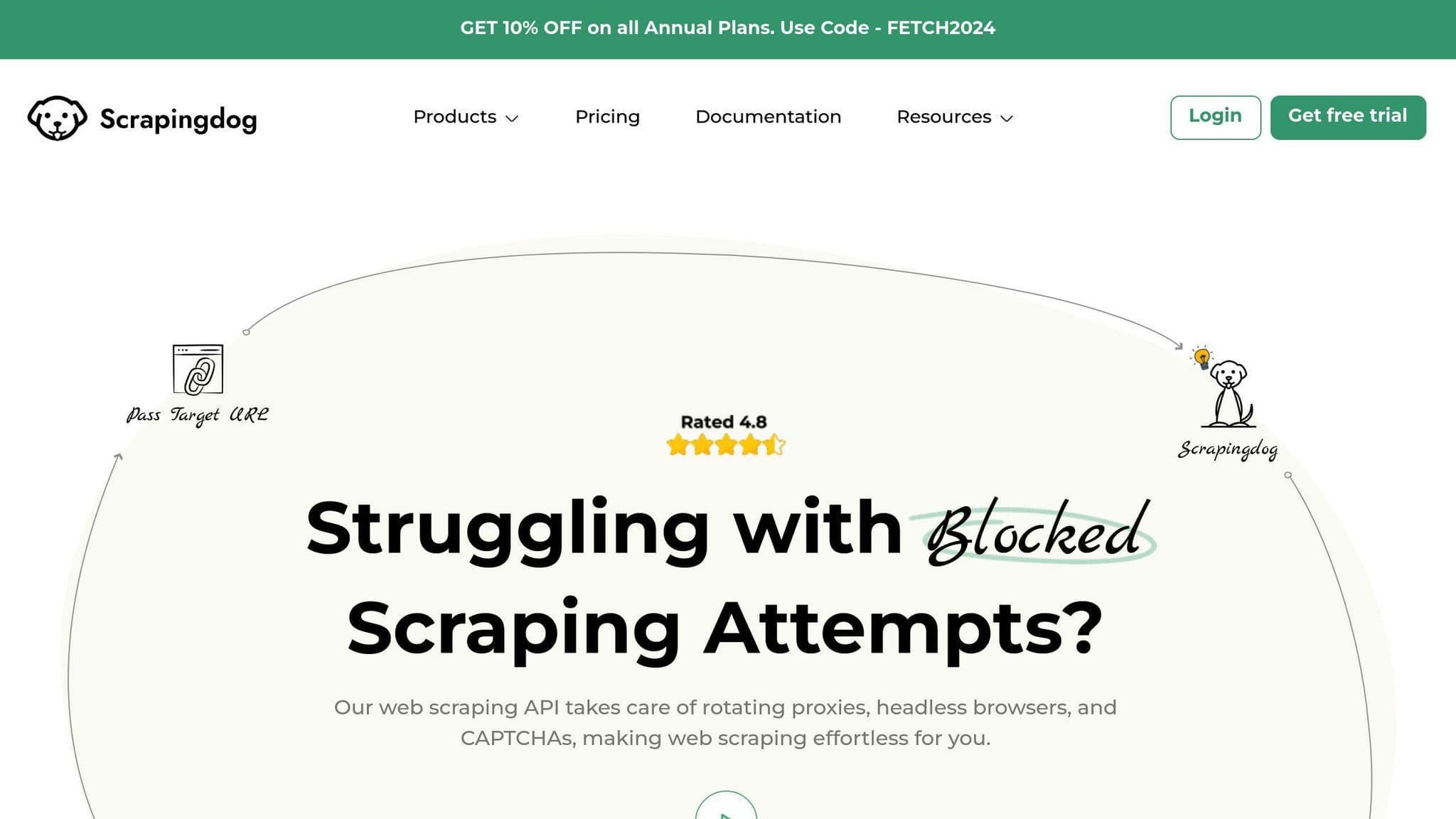
Scrapingdog focuses on extracting data from Amazon and Google Shopping, providing e-commerce businesses with detailed pricing insights from these major marketplaces.
| Feature | Details |
|---|---|
| Primary Focus | Amazon and Google Shopping platforms |
| Starting Price | $40/month |
| Key Capabilities | Regular price updates, API integration, data extraction |
| Technical Level | Intermediate to Advanced |
Key Features
Scrapingdog uses a strong API to deliver pricing data. It supports frequent price updates, helping businesses monitor competitor changes almost in real time. The platform’s credit-based pricing model works for businesses of all sizes, and its built-in proxy rotation and anti-scraping tools ensure smooth data collection.
Technical Capabilities
Scrapingdog’s API is designed to tackle anti-scraping measures and handle JavaScript rendering, making data extraction easier for developers. The platform also offers detailed documentation and support, helping teams set up and start using the data efficiently.
Applications and Considerations
Scrapingdog is ideal for businesses focused on Amazon, offering reliable and precise pricing data. Frequent updates allow for quick reactions to market changes. However, the API setup requires technical skills, which could be a hurdle for teams without a developer on hand.
While Scrapingdog excels in platform-specific data, the next tool, Apify, caters to businesses needing broader market coverage with more customizable scraping options.
8. Apify
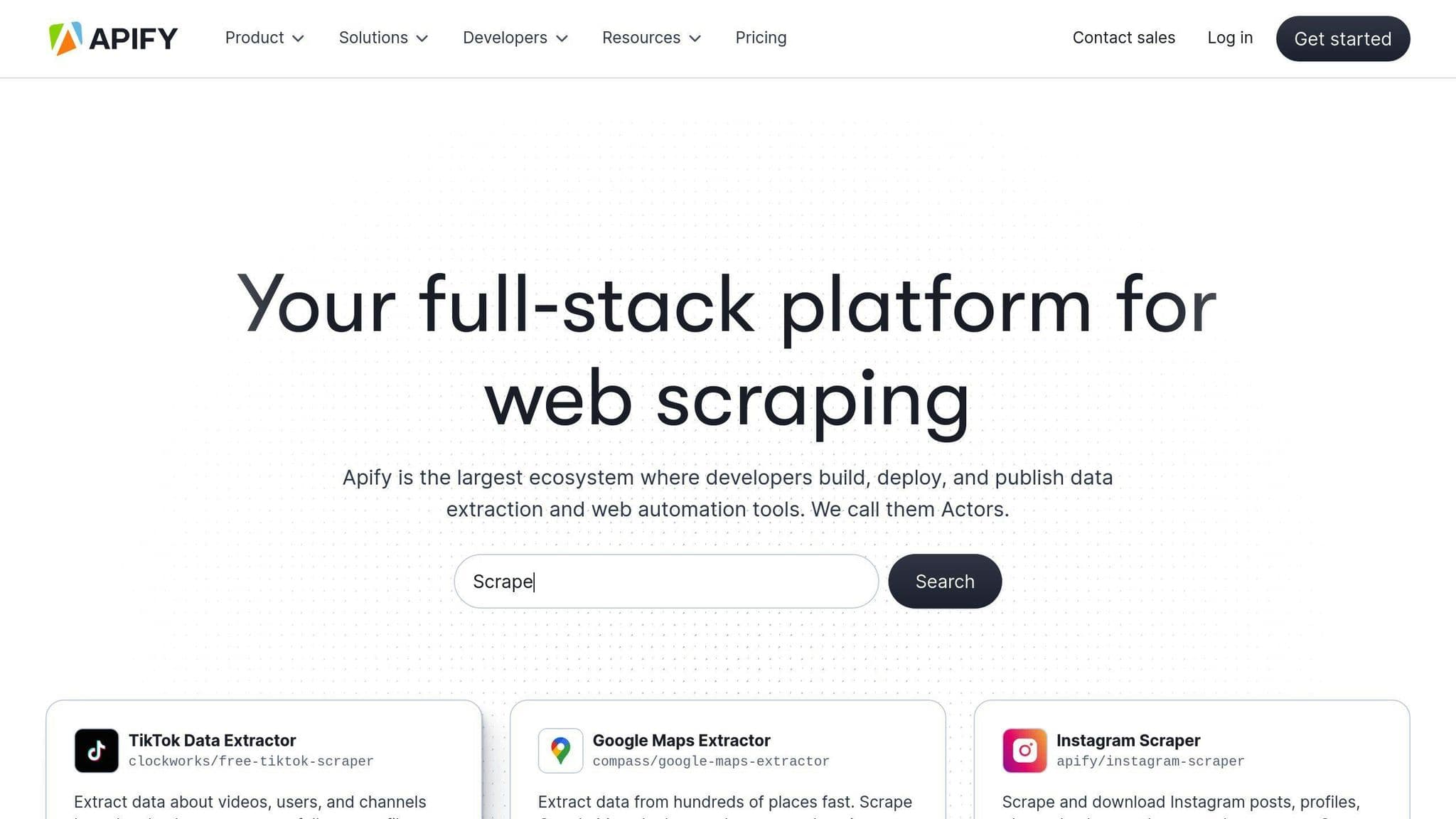
Apify is a web scraping platform designed to extract accurate pricing data from even the most complex websites. Its infrastructure is built to handle extensive e-commerce price monitoring tasks.
| Feature | Details |
|---|---|
| Primary Focus | Multi-platform web scraping and automation |
| Starting Price | Free tier with 1,000 API credits/month |
| Key Capabilities | Custom scrapers, real-time monitoring, API integration |
| Technical Level | Suitable for beginners to advanced users |
Key Features
Apify provides flexible scraping solutions through a user-friendly visual interface and supports coding with JavaScript and Python for custom scraper development. It includes pre-built scrapers tailored for major platforms like Amazon, eBay, and Google Shopping, making it a go-to tool for e-commerce businesses.
Technical Capabilities
With API integration, Apify ensures smooth data transfer into existing business systems. It also includes tools to overcome common challenges in web scraping, ensuring reliable and consistent data collection. The platform uses thorough validation processes to maintain high accuracy in price monitoring.
Pricing Structure
Apify offers a free tier with 1,000 API credits per month. Paid plans begin at $49/month for 10,000 credits and scale up to enterprise-level packages for larger needs.
Applications and Considerations
Apify is highly adaptable, making it an excellent choice for businesses needing custom scraping solutions across multiple e-commerce platforms. While it does require some technical knowledge, the platform provides detailed documentation and an active community to assist users.
Apify works for teams that want a marketplace of community-built actors and don't mind variable quality between them. For consistent, vendor-maintained marketplace coverage instead, see the ShoppingScraper vs Apify comparison.
For those looking for an easier, more visual alternative to price scraping, ParseHub might be worth exploring.
9. ParseHub
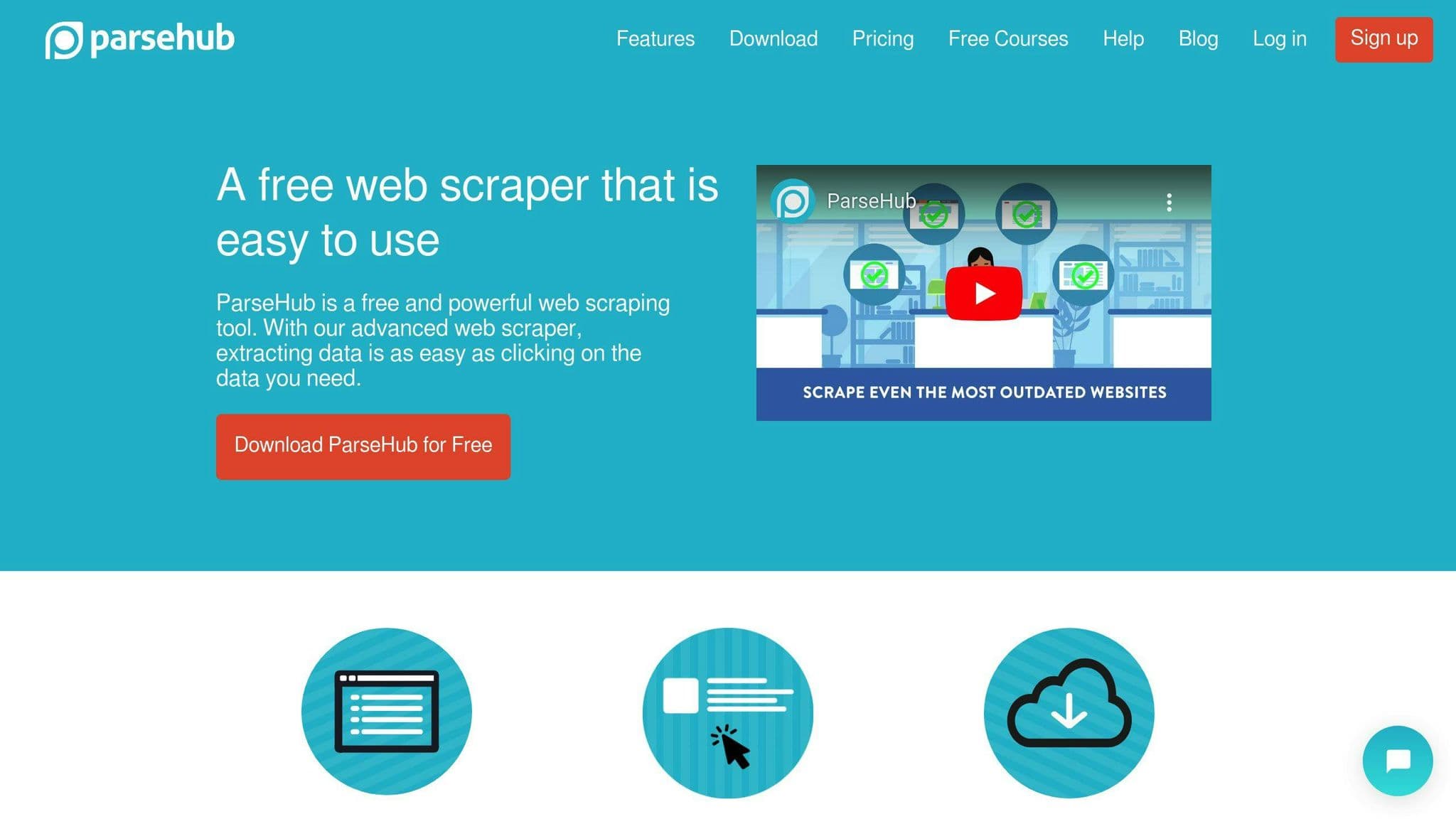
ParseHub is a web scraping tool designed to help businesses monitor prices and refine their competitive strategies. With its visual interface and machine learning features, it simplifies the process of extracting data from websites.
| Feature | Details |
|---|---|
| Primary Focus | Visual web scraping with machine learning |
| Starting Price | Free tier available; paid plans from $49/month |
| Key Capabilities | Scraping dynamic websites, real-time monitoring |
| Technical Level | Beginner-friendly but includes advanced options |
Features and Capabilities
ParseHub stands out for its ability to scrape data from JavaScript-heavy and dynamic websites. Users can extract information by simply clicking on elements in its visual interface, making it accessible even for those without technical expertise. For more advanced needs, it includes features like API integration for seamless data transfer and built-in validation to ensure accurate results, especially for price monitoring tasks.
Pricing
ParseHub offers a free plan, making it a good starting point for small businesses or individual users. Paid plans begin at $49/month, with enterprise options available for larger-scale needs or custom configurations.
Applications
The platform's ease of use makes it a solid choice for beginners, while its machine learning capabilities handle complex tasks like scraping data from e-commerce sites with dynamic pricing. This makes it especially useful for businesses focused on competitive pricing strategies.
For those looking for additional customization and automation, tools like WebHarvy can complement ParseHub's offerings.
10. WebHarvy
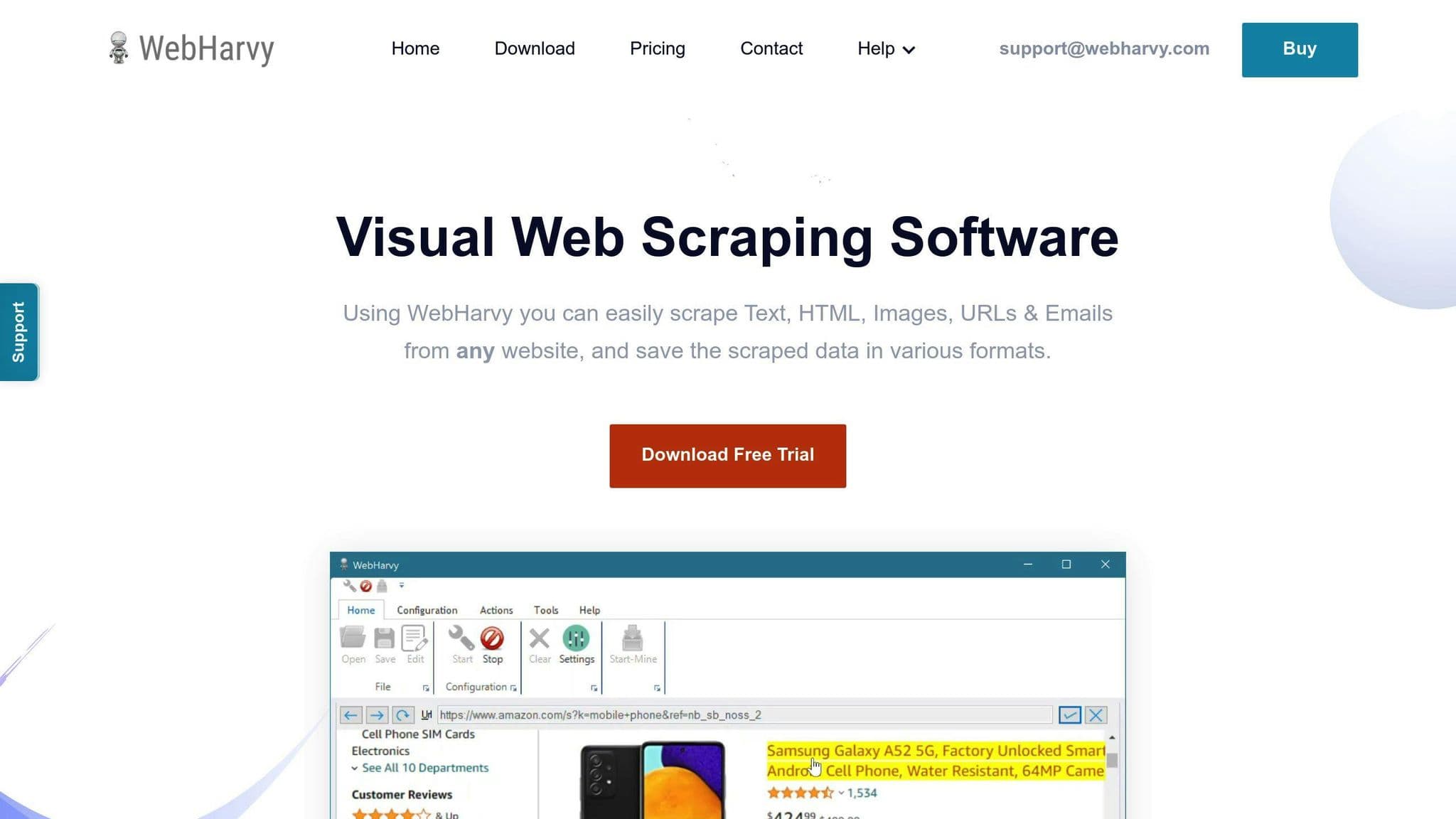
WebHarvy is a visual web scraping tool designed for e-commerce businesses to collect pricing data without needing coding skills. Its one-time purchase option provides an affordable alternative to subscription-based services.
| Feature | Details |
|---|---|
| Primary Focus | Visual web scraping for e-commerce |
| Starting Price | One-time purchase starting at $139 (single user) |
| Key Capabilities | Real-time monitoring, proxy rotation, API integration |
| Technical Level | Beginner to intermediate |
Features and Capabilities
WebHarvy is well-equipped to handle JavaScript and AJAX content, making it suitable for modern e-commerce platforms. It uses a built-in browser and proxy rotation to bypass anti-scraping measures, ensuring accurate data collection. Users can create custom workflows with a simple point-and-click interface, making it user-friendly even for those without technical expertise. The tool also supports automated scheduling, so businesses can keep their pricing data updated without manual effort.
Pricing Structure
WebHarvy follows a one-time purchase model, starting at $139 for a single-user license and $199 for a business license. This eliminates recurring subscription costs, making it a budget-friendly option for companies planning long-term price monitoring. Compared to tools like Bright Data or Oxylabs, its pricing structure is especially appealing for businesses seeking cost-effective solutions.
E-commerce Applications
WebHarvy excels at extracting data from major e-commerce marketplaces. It supports multiple data export formats, allowing easy integration of pricing information into existing systems. Built-in validation ensures data accuracy, while API integration enables automated updates, making it a reliable choice for businesses focused on price monitoring.
With its affordable pricing and strong scraping features, WebHarvy is a smart pick for companies looking to streamline their pricing strategies over the long term.
Comparison Table
A quick side-by-side. Pricing is what each vendor publishes on their site at the time of writing — vendor pricing changes frequently, so confirm before purchasing.
| Tool | Type | Starts around | Best fit | Marketplace coverage |
|---|---|---|---|---|
| ShoppingScraper | E-commerce data API | €49/mo | Retailers + enterprises that want pre-parsed price data and an out-of-the-box dashboard | 14 marketplaces (Google Shopping, Amazon, bol.com, Coolblue, Lidl, AH, IKEA, and more) with structured fields |
| Oxylabs | Scraping infrastructure | $49/mo (entry) | Engineering teams building custom scrapers across 100+ sites | Generic — you build the parser |
| Smartproxy | Proxy + scraping API | $30/mo (entry) | Teams with their own scraper logic needing geo-targeting | Generic — you build the parser |
| Bright Data | Scraping infrastructure | from $4/1K requests | Enterprise teams comfortable building data pipelines | Generic + some pre-built datasets |
| ScraperAPI | Proxy/scraping API | $49/mo (entry) | Developers needing a credit-based API for Amazon/Walmart-style tasks | Generic — you build the parser |
| Crawlbase | Crawling API + Smart Proxy | from $99/mo | Teams wanting both an API and proxy access | Generic + some templates |
| Scrapingdog | Scraping API | from $40/mo | Developers focused on Amazon and Google Shopping | Generic — you build the parser |
| Apify | Marketplace of pre-built actors | Free tier; from $49/mo | Teams wanting community-built scrapers + custom workflows | Varies per actor |
| ParseHub | Visual desktop scraper | Free tier; paid from ~$189/mo | Non-developers doing one-off extractions | Any site you click through |
| WebHarvy | Visual desktop scraper | $139 one-time | One-off, single-machine scraping projects | Any site you click through |
What this actually means
| Capability | Out-of-the-box on ShoppingScraper | DIY on Bright Data / Oxylabs / Smartproxy / ScraperAPI |
|---|---|---|
| Structured price/stock/seller fields per marketplace | ✅ pre-parsed | ❌ you write the parser |
| Scheduled monitoring + price-change alerts | ✅ built-in | ❌ build it yourself |
| Geo-pricing across 50+ countries | ✅ built-in | ❌ build it yourself |
| Dashboard for non-developers | ✅ built-in | ❌ build it yourself |
| Proxy network + anti-bot handling | ✅ managed | ✅ managed |
| Engineering hours before first chart | Hours | Weeks-to-months |
When choosing a tool, think about:
- Monthly request volume: How much data will you need to process?
- Target marketplace coverage: Does the tool support the platforms you monitor?
- Geographic targeting: Are specific regions critical for your pricing strategy?
- Integration options: Will it work with your existing systems?
- Budget: Does the pricing align with your financial plan?
Conclusion
The right price scraping tool depends on whether you need structured e-commerce data out of the box or general-purpose scraping infrastructure to build on top of.
Most tools on this list — Bright Data, Oxylabs, Smartproxy, ScraperAPI, Apify — are infrastructure layers. They give you proxies, raw HTML, and the freedom to scrape anything, but you still need to build the marketplace parsers, the price-tracking dashboard, the scheduler, and the alert system yourself. That's a 3–6 month engineering project before you see your first competitor price chart, plus ongoing maintenance every time a marketplace changes its layout.
ShoppingScraper takes the other approach: 14 marketplace scrapers (Google Shopping, Amazon, bol.com, Coolblue, Lidl, AH, and more) return pre-parsed structured price data, with the dashboard, scheduling, geo-pricing, and alerts already built. That makes it the practical choice for any e-commerce team — from a single-store retailer benchmarking 50 SKUs to an enterprise tracking 100,000+ products across 50 countries — that wants competitive pricing intelligence rather than a scraping platform to maintain.
How to choose a price scraping tool
When evaluating any tool, focus on:
- Marketplace coverage: does it cover the platforms your competitors actually sell on, with structured fields (price, stock, seller, variants), or does it return raw HTML you have to parse?
- Time-to-first-value: can a non-developer set up scheduled monitoring this afternoon, or does it need an engineering ticket?
- Total cost of ownership: API price + parser maintenance + dashboard build + ongoing reliability work — not just the per-request rate.
- Scalability: can it grow with your catalog without a re-architecture?
CEO & Co-founder
E-commerce pricing expert with 5+ years building data infrastructure for retailers and brands. Co-founded ShoppingScraper to make competitive pricing intelligence accessible to every e-commerce business.